




AI Integration Services
AI integration services connect models like GPT, Claude, and custom ML into the software your business already runs, so your CRM, ERP, and internal tools gain prediction, language understanding, and vision without being replaced. Zero Dollar Website does this for companies whose systems work fine but think too little: established tools, growing data, no intelligence layer. You pay $0 upfront and nothing until the integration is live inside your stack.
The Numbers Behind Our Integration Work
AI Integration Services We Deliver
Direct AI System Connections
We connect AI capabilities to the platforms you already run, with clean APIs, proper auth, and monitoring from day one. Your team keeps its tools; the tools get smarter.
ML Model Integration
Trained models are only useful once they run inside your daily systems. We deploy yours, or build them, into live environments where they score, predict, and classify in real time, and we tune them on your data so accuracy keeps improving after launch.
Conversational AI
We embed NLP-driven chat, voice, and text processing into your products and support channels. The systems understand real customer language, run sentiment analysis, and hand off to humans with context when a conversation needs one.
Visual Intelligence Setup
Computer vision wired into your operations: object detection, pattern recognition, and real-time video analysis. We have put vision systems into automotive, medical, and security settings where a wrong reading actually costs something.
Forecasting Capabilities
Predictive models integrated into your planning tools, so demand, risk, and customer behavior forecasts show up where decisions get made instead of in a separate report nobody opens.
AI Automation Integration
We connect AI decision-making into your existing workflows so routine steps run without manual effort. Work moves faster, errors drop, and your team's time shifts to the cases that need judgment.
Types of AI Integration Solutions

Computer Vision Solutions
Vision systems that automate visual work: inspection, counting, quality checks, and monitoring. They read images and video at production speed and flag what a human should look at.
Facial Recognition Systems
Deep-learning recognition integrated for authentication and access control, built with the consent and privacy handling your jurisdiction requires.
Self-driving Vehicles
Perception and decision components for autonomous systems that read their surroundings and respond in real time, integrated into the vehicle and fleet platforms around them.
Fraud Detection Solutions
Models that score transactions as they happen and block or escalate the suspicious ones. Financial teams get fewer losses and fewer false alarms at the same time.
Demand Projection Solutions
Forecasting integrated into inventory, pricing, and staffing tools, so the plan updates when the signal changes instead of at the next quarterly review.
Artificial Intelligence in Healthcare
Image processing and decision support integrated into clinical workflows to help practitioners read scans faster and catch what tired eyes miss, with privacy rules enforced end to end.
Success Stories from Our Integration Builds
Three integration projects that took working-but-disconnected systems and gave them a shared brain. Each shipped as a fixed-scope build, paid for after delivery.
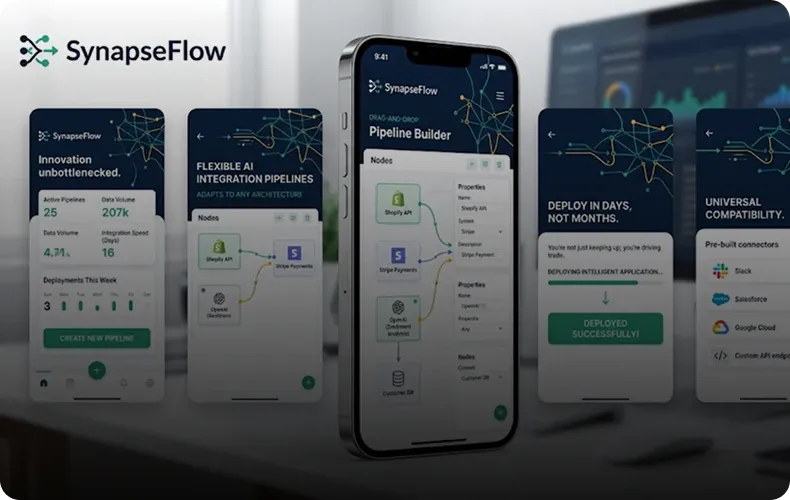
Meshport
Meshport was built for a company whose innovation kept stalling at the same wall: every new AI idea meant another custom connection to the same old systems. We gave them one integration layer that any model can plug into, and pilots that took months now take weeks.
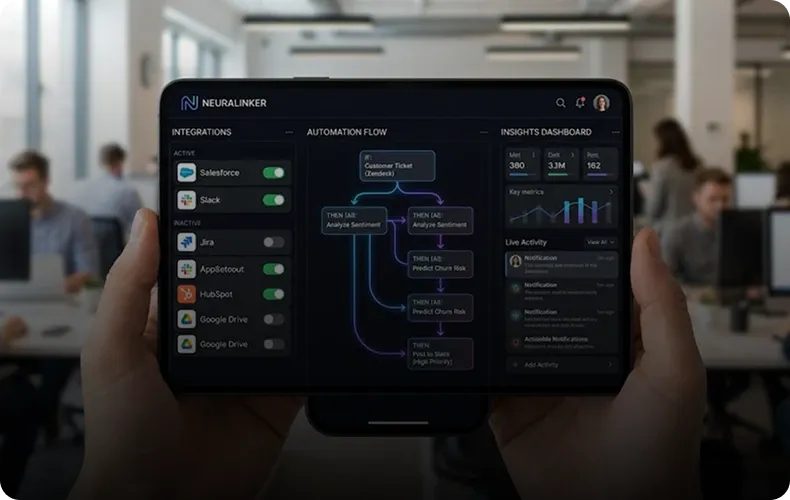
Wirefield
Wirefield came out of a team drowning in disconnected tools: data in five places, answers in none. It synchronizes records across platforms and feeds the unified stream to their ML models, so every department finally works from the same numbers.
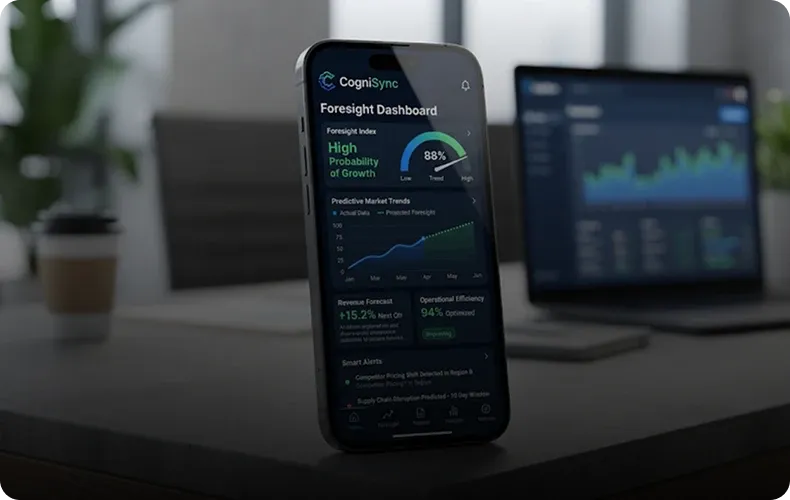
Fuseboard
Fuseboard exists because fragmented dashboards were hiding what mattered. It pulls signals from every system into one intelligence layer that ranks what needs attention today, and managers stopped reconciling reports and started acting on them.
What AI Integration Costs, and When You Pay
Integration pricing depends on the complexity of your systems, the AI technology involved, and how much customization the connection needs. The tiers below show typical ranges. Whatever the tier, our terms are the same: fixed quote, $0 upfront, payment after the integration is delivered and working.

Starter AI Integration
Typically $5,000 to $10,000. The right fit for startups and small teams proving a concept: one AI capability connected to one system, live and measurable.

Simple AI Integration
Usually $10,000 to $20,000 depending on the platforms involved. A production integration with proper auth, logging, and monitoring, connected to your real data.

Mid-Level AI Integration
Between $20,000 and $40,000, driven by the complexity of data connections and feature scope. Multiple systems, custom model work, and dashboards your team uses daily.

Complex AI Integration
From $40,000 to $75,000 and up, based on scale, customization, and support requirements. Enterprise-wide integration layers with security review, compliance handling, and staged rollout.
Ready to make your systems think?
Tell us what you run and what it should be smarter about. We will scope the integration, build it, show it working inside your stack, and only then send an invoice.
Get started at $0 upfrontThe Integration Experts on Your Project
An integration project succeeds on the strength of the people wiring it together. These are the roles on your build and what each one is responsible for.
AI Integration Engineers
They connect AI services and models to your existing systems, own the APIs and data contracts between them, and make sure a failure on either side degrades gracefully instead of silently.
ML Integration Engineers
They take trained models into live environments: serving, scaling, and monitoring them so real-time predictions stay fast and accurate under production load.
Data Integration Specialists
They merge, clean, and synchronize data across your platforms, because a model fed inconsistent data gives confident wrong answers. Reliable inputs are their whole job.
NLP Integration Engineers
They embed language capabilities, chat, voice, and text processing, into your products and channels, tuned to your domain vocabulary rather than generic training data.
Computer Vision Integration Experts
They implement the systems that read images and video inside your operations, from camera feed to decision, calibrated on your actual conditions rather than lab samples.
AI Solution Architects
They design the end-to-end framework so models, APIs, data pipelines, and security controls fit together as one system that your own team can understand and extend.
Data Pipeline Engineers
They build and maintain the infrastructure moving data between your models, analytics, and business systems, reliably, on schedule, and with alerts before you notice a gap.
Our AI Integration Process
Seven steps take an integration from data audit to monitored production. You review working output at every step, and payment comes after delivery, not before.
Information Collection
We audit the data your systems hold, where it lives, and what shape it is in. Accurate integrations start with honest answers about data quality, so this step produces a findings report you can challenge before design begins.
Framework Design and Blueprint
We produce a detailed integration blueprint: which AI capabilities connect where, through which APIs, with what security and fallback behavior. You approve the design on paper, the cheapest place to change it.
Model Integration and Optimization
Trained models go into your live environment and get tuned against your real data and latency requirements, so accuracy numbers come from production conditions rather than a notebook.
Smart Vision Integration
Where the project involves voice, text, or visual data, we integrate the NLP and vision components that understand it in context, tested on your actual documents, calls, and camera feeds.
Validation and Performance Testing
Every integration is tested for accuracy, speed, and consistency before launch, including the failure cases: bad inputs, downstream outages, and load spikes. Nothing ships on a demo's evidence.
Staged System Deployment
Deployment is staged so your operations keep running while the AI comes online. We integrate module by module, verify each one against live traffic, and keep a rollback path at every stage.
Ongoing Performance Management
After launch we monitor accuracy, efficiency, and data alignment, retrain when drift appears, and report in plain language. Ongoing work is pay-as-you-go, in line with our no-subscription model.
What Our Clients Say
Notes from teams whose systems have been running with integrated AI in production.
They linked our tools and processes into one intelligent layer. Every department now works from live, data-driven insight instead of last week's exports.
Our systems never talked to each other. After the integration, interoperability just works, and the core processes that used to crawl now finish in a fraction of the time.
The unified AI layer improved personalization, response times, and the overall experience on our platforms. Architecturally, it is the cleanest vendor work I have signed off on.
We had single-purpose AI models scattered everywhere. They turned that into one ecosystem that automates our workflows and cut manual effort without adding operational complexity.
FAQs About AI Integration Services
What are AI integration services and how do they help my business?+
AI integration is connecting models, such as GPT, Claude, or custom ML, into the software you already run so it can predict, understand language, and automate decisions. The benefit is intelligence without replacement: your team keeps familiar tools while gaining automation, insight, and faster decision-making.
How much does AI integration cost?+
With Zero Dollar Website, nothing upfront. We scope the integration, quote a fixed one-time price, build it, and you pay after it is live inside your systems. Typical projects range from around $5,000 for a starter integration to $75,000 and up for enterprise builds. No deposits, no subscriptions.
How long does an AI integration take?+
A single-capability integration into one system usually ships in three to five weeks. Multi-system builds with custom models run two to four months. The first scoping week produces a written timeline, so you know the delivery date before any build starts.
Which kinds of AI integration do you offer?+
Conversational AI and chatbots, ML model deployment, predictive analytics, NLP and text processing, computer vision, and workflow automation. Most projects combine two or three: for example, a vision model feeding a forecasting dashboard, or a chatbot wired into your CRM.
Will the integration disrupt the systems we run today?+
No. We deploy in stages alongside your existing setup, verify each module against live traffic, and keep a rollback path at every step. Your operations keep running throughout, and nothing is switched over until it has proven itself on your real data.
Who owns the integration after delivery?+
You do. The code, the model configurations, the pipelines, and the documentation are handed over as your property at delivery. There is no lock-in and no required retainer; your own team can run and extend it, and we are available pay-as-you-go if you want us.
