




AI Speech Recognition Development Services
AI speech recognition development is the work of building software that turns spoken audio into accurate text and commands your systems can act on. Zero Dollar Website builds speech-to-text engines, voice interfaces, and transcription pipelines for support teams, operations teams, and product builders who deal in spoken words all day. You pay $0 upfront: we build the system, you watch it transcribe your real audio, and the invoice arrives only after delivery.
The Numbers Behind Our Speech Work
The Speech Models Behind Our Systems
Speech engines have real trade-offs in accuracy, latency, and where the audio is allowed to live. We pick the engine per project and prove it on samples of your own recordings before the full build.
DeepSpeech
Our DeepSpeech builds are tuned for live transcription: quick speech-to-text conversion that keeps holding up across accents and imperfect audio, which makes it a workhorse for call and dictation workloads.
Wav2Vec 2.0
Wav2Vec 2.0 learns from raw audio, which pays off when labeled training data is scarce. We use it where context matters: natural phrasing, run-on sentences, and voice workflows that need more than keyword spotting.
Whisper AI
Whisper is our default for multilingual work. It transcribes dozens of languages with strong accuracy out of the box, and we tune it further on your vocabulary so global teams get one consistent engine.
Kaldi
Kaldi gives us full control over the recognition pipeline. When a project needs custom acoustic models, unusual audio formats, or tight on-premise constraints, Kaldi is the toolkit we reach for.
Gemini Pro
For projects on Google's stack we pair Google Speech-to-Text with Gemini, so transcripts arrive already summarized, tagged, and ready to act on rather than as a wall of raw text.
Mixtral 8x7B
Mixtral's efficiency suits high-volume voice command systems. It keeps per-request costs low at scale, which matters when thousands of short utterances flow through the system every hour.
AI Speech Recognition Development Services We Deliver
Six services take a speech system from scoped idea to production. Each one ends with something you can test on your own audio, not a slide deck.
Voice Model Engineering
We build recognition models around your workflows, vocabulary, and audio conditions, so transcription holds up on the calls and recordings your business actually produces.
- A model trained on your own audio and terminology
- Better accuracy on domain vocabulary and context
- Runs on web, mobile, and enterprise systems

Voice Model Adaptation
We adapt proven engines, DeepSpeech, Wav2Vec, Whisper, and Kaldi, to your requirements, tuning for your accents, noise levels, and security constraints.
- Tuned for your industry's commands and phrasing
- Efficient models that keep compute costs down
- On-premise or hybrid deployment for full data control
End-to-End System Integration
The speech engine connects to your CRMs, ERPs, websites, and apps, so transcripts and voice commands land in the systems where the work happens.
- Clean API and backend integration
- Live dashboards for accuracy and usage
- Secure rollout on cloud, hybrid, or on-premise
Optimization and Support
After launch we keep the system sharp: accuracy tracked, models updated, and security patched, so recognition quality climbs over time instead of drifting.
- Regular updates for accuracy and speed
- Security and compliance patches included
- New capabilities added as your needs change
Voice Refinement
We train on your proprietary data to improve context awareness and tone handling, so transcripts read the way your teams and customers actually speak.
- Sharper accuracy on industry-specific speech
- Recognition errors identified and tuned away
- Output that matches your house writing style
Voice Framework
The underlying architecture is sized for your volume and budget, and designed to grow from one workflow to company-wide use without a rebuild.
- Handles large concurrent user loads
- Costs kept down through efficient resource use
- Modular architecture that scales cleanly
Put speech recognition to work in your business.
We build it, you hear it transcribing your real audio, and only then do you pay.
Get started at $0 upfrontTypes of AI Speech Recognition Solutions We Develop
The same recognition technology does very different jobs depending on where you point it. These are the six systems we build most often.

Customer Support Voice Assistants
Support systems that hear the customer's question, understand it in real time, and either resolve it or route it with an accurate transcript attached, across every channel you run.

Voice-Powered Lead Generation
Voice front doors for sales: callers state what they need in their own words, the system qualifies and routes them, and no interested prospect gets lost in a phone menu.

E-commerce Voice Assistants
Voice search, product discovery, and order placement by speech, so shoppers can find and buy without typing, and repeat orders take one sentence.

Internal Workflow Voice Automation
Enterprise-scale voice commands that trigger lookups, log records, and move workflows along, so warehouse, field, and floor teams work hands-free.

Voice Appointment Assistants
Scheduling systems that handle bookings, reminders, and availability by voice on their own, keeping calendars full without tying up staff.

Recording and Transcription Systems
Speech-to-text pipelines that transcribe meetings, calls, and media accurately, in real time or in batch, so documentation happens as a side effect of talking.
Success Stories from Our Speech Recognition Builds
Three speech systems that left the demo stage and now process real audio every day.
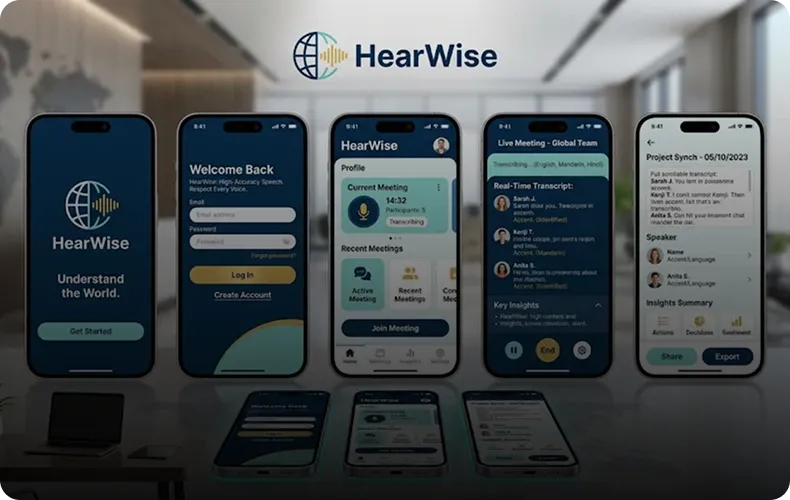
Audexa
Built for a global support operation whose old tooling failed on accents and non-native speakers. Audexa is a multilingual recognition engine tuned on real customer audio, and it transcribes the full range of voices the business actually hears, not just studio-clean English.
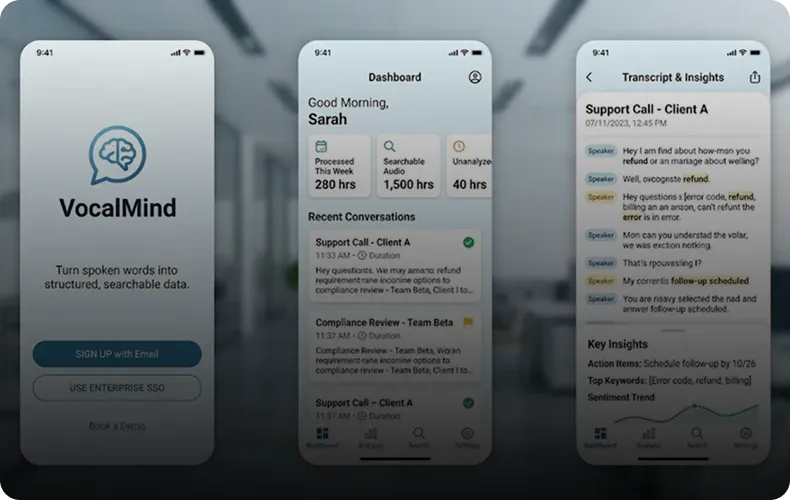
Scribewell
An enterprise speech-to-text engine for teams whose audio was going undocumented. Scribewell turns calls and recordings into structured, searchable records accurate enough for compliance work, so hours of spoken information stopped disappearing into archives.
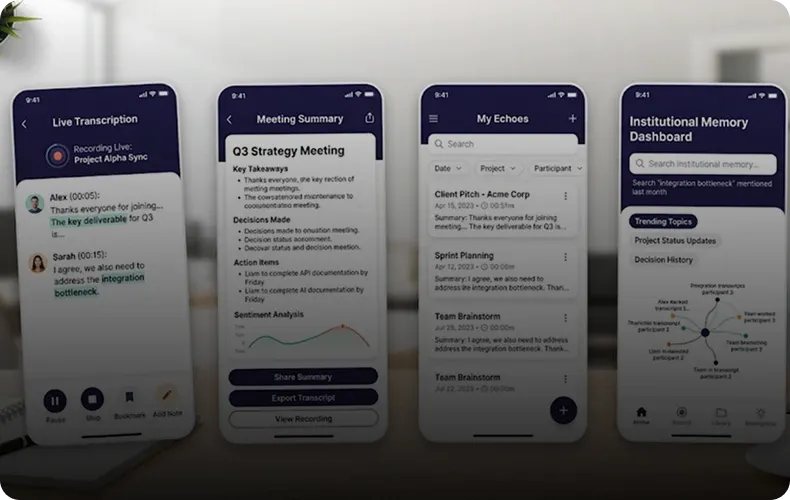
Clarivox
A real-time meeting transcription engine born from lost decisions and unreliable notes. Clarivox captures conversations as they happen with clarity people trust, so teams leave meetings with a record instead of a memory.
Speech Recognition for Every Industry
Recognition accuracy lives and dies on vocabulary. We build with your industry's terms, accents, and audio conditions, so the system understands your field from day one.

Automotive

eCommerce

CRM
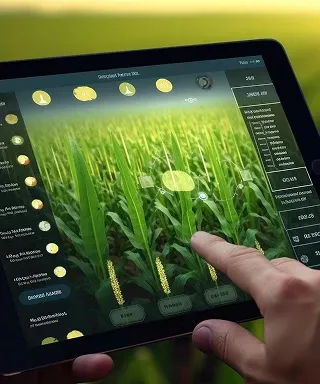
Agriculture

B2B Software

Food

Logistics

Fintech

Healthcare

Travel

Manufacturing

Real Estate

Education

Fashion

Legal

Entertainment
Why Choose Zero Dollar Website for AI Speech Recognition
Speech recognition fails in the details: accents, noise, jargon. We engineer for those details, and we price the work so your risk is zero: nothing upfront, payment after delivery.
Give every spoken word somewhere useful to go.
Accurate speech-to-text cuts busywork, speeds up workflows, and turns recorded audio into records you can search.
- A speech strategy scoped to your workflows
- Fast, dependable setup
- Accuracy tuned continuously after launch
- One engine across web, mobile, and desktop
Awards & Recognition in Speech Recognition
Independent review platforms have rated and listed this work for years. The badges are theirs to award, and we let them do the talking.
The Speech Recognition Tech Stack We Build On
Production speech systems need dependable plumbing: solid languages, current frameworks, and infrastructure that keeps latency low while audio streams in. That is what we build on.
- Programming Languages
- Frameworks & Libraries
- Modules & Toolkits
- Cloud Providers
- Visualization


Our AI Speech Recognition Development Process
Eight steps take your system from first scoping call to monitored production, and you review the output at every one of them.
Requirement Gathering
We study your audio sources, languages, accuracy targets, and the systems the output must reach, then write a scope with success measures everyone agrees on before any build starts.
Voice UI/UX Mapping
We design the recognition flows, user interactions, and error-handling logic, and test them against real speech patterns, so the awkward moments are handled on paper first.
Technology Selection
We choose the ASR models, NLP engines, and infrastructure that fit your accuracy, latency, and privacy targets, and prove the combination on samples of your own audio.
Prototype Development
A working prototype transcribes your real recordings early. What it gets wrong drives the next iteration, so problems surface in week two instead of at launch.
System Integration
The speech engine connects to your CRMs, ERPs, apps, and workflow tools with proper auth and logging, so transcripts land where the work happens.
Training & Optimization
We train on domain-specific datasets and tune for speed, accuracy, and noise resistance until the system clears the quality bar set in step one.
Launch & Deployment
The system goes live across cloud, mobile, web, and enterprise environments with performance monitoring watching from the first minute.
Continuous Maintenance & Support
We track accuracy and user feedback in production, retrain on what the system misses, and ship improvements on a regular cycle with plain-language reports.
What Our Clients Say
Notes from teams running our speech recognition in production today.
Transcription that used to take hours now happens as the audio comes in. Accuracy on our technical vocabulary was the surprise; it handles terms our last vendor never learned.
We shipped voice features in a quarter. Their team handled the model tuning and the integration, and recognition quality has held up as usage grew tenfold.
It understands our callers' accents and phrasing without coaching. Voice-to-text finally feels invisible to the people using it, which is the whole point.
Documentation that used to trail meetings by days is done when the meeting ends. The transcripts need almost no correction, so people actually trust them.
FAQs About AI Speech Recognition Development
What does AI speech recognition development cost?+
With Zero Dollar Website, nothing upfront. We scope your system, quote a one-time project price, build it, and you pay after it is delivered and transcribing your real audio. No deposits, no subscriptions, and no invoice before you have seen it work.
Can the system work with my existing software?+
Yes, that is most of the value. We connect speech systems to CRMs, ERPs, helpdesks, and internal apps through their documented APIs, so transcripts and voice commands land directly in your systems of record instead of piling up as loose text files nobody reads.
Do you support multiple languages and accents?+
Yes. Engines like Whisper give us strong multilingual coverage out of the box, and we tune on your own audio so regional accents and mixed-language speech are handled. Language coverage is agreed during scoping to match the markets you serve.
How long does development take?+
A focused build such as call transcription or a voice command interface typically ships in three to five weeks. Systems with deep integrations or several languages run eight to twelve. Scoping in the first week produces a concrete timeline you can hold us to.
Can speech recognition work in noisy environments?+
Yes, if it is engineered for them. We test and tune on audio recorded in your actual environment, whether that is a plant floor, a drive-through, or a moving vehicle, and we add noise-robust acoustic handling wherever the conditions demand it.
Will it work across different platforms?+
Yes. One recognition engine serves your web, mobile, desktop, and embedded surfaces, so accuracy stays consistent everywhere and every improvement lands on all platforms at once. There is no separate build to maintain per platform, and no channel that lags behind the others.
How do you keep our audio and transcripts secure?+
Audio and text are encrypted in transit and at rest, access is role-controlled, and retention follows your own policy. When your industry rules require it, the whole pipeline runs on your infrastructure, so recordings and transcripts never leave systems you control.
Who owns the speech recognition system after delivery?+
You do. The tuned models, the training data we prepared together, and every integration are handed over fully documented, with no licensing strings attached. If you ever want to run, extend, or move the system without us, you can do it the same day.
